





![Sophomore Lily Bell posing as a player in the senior assassin game. Seniors participating in the game eliminate others by squirting them with a water gun, and can wear goggles for immunity against others. “People did have to go out and buy [water] guns, but most people have the googles at home, but you don’t even have to use a gun, you can use water of any sort,” senior Gwyn Christensen said.](https://ahstalonnews.com/wp-content/uploads/2026/05/unnamed-1-1-900x1200.jpg)
![The shadows against a captivating blue are a nod to the “Catch Me If You Can” musical poster, both for this performance and the blue from the Broadway show. The detectives in this scene are at shooting practice, in preparation for when they finally encounter Frank Abagnale Jr. “We always say our motto is ‘theater is a team sport,’ and really just emphasizing to our students that everyone is welcome in the drama department. There's always a role for you, whether or not, on stage or behind the scenes, in the costume shop, in the scene shop. [There are] all sorts of different things that go into bringing a show to life. So we love our drama hawks and welcome everyone to drama,” Drama Director Mollie Jo Blahunka said.](https://ahstalonnews.com/wp-content/uploads/2026/04/cmiyc-1200x800.jpg)
![Henry, Emily (2021). People we meet on vacation [Book cover]. Berkley Books. Image used under fair use for purposes of commentary and review. Haley, Brett (2026). People we meet on vacation [Movie poster]. Movie poster courtesy of 3000 Pictures and Temple Hill Entertainment. Made by Adilyn Hoop using Canva.](https://ahstalonnews.com/wp-content/uploads/2026/01/vacay1.png)









![Lockhart, E. (2025). We fell apart [Book cover]. Delacorte Press. Image used under fair use for purposes of commentary and review. The newest book in the “We were liars” collection was released Nov. 4.](https://ahstalonnews.com/wp-content/uploads/2025/11/wefell1.png)










![A Group of PEOPEL PE students and helpers set up an obstacle course during class. The “Amazing Race” unit had started in PEOPEL PE where the students and helpers got to compete in a variety of different activities and games. “We try our best to make [inclusion] a school-wide event, but it's just so much more different when you actually engage with the students hands-on and actually get to know them as people.” Sophomore Bree Christensen said. Photo Taken by Ada McNulty.](https://ahstalonnews.com/wp-content/uploads/2026/05/unnamed-12-1200x900.jpg)










Spoilers ahead.
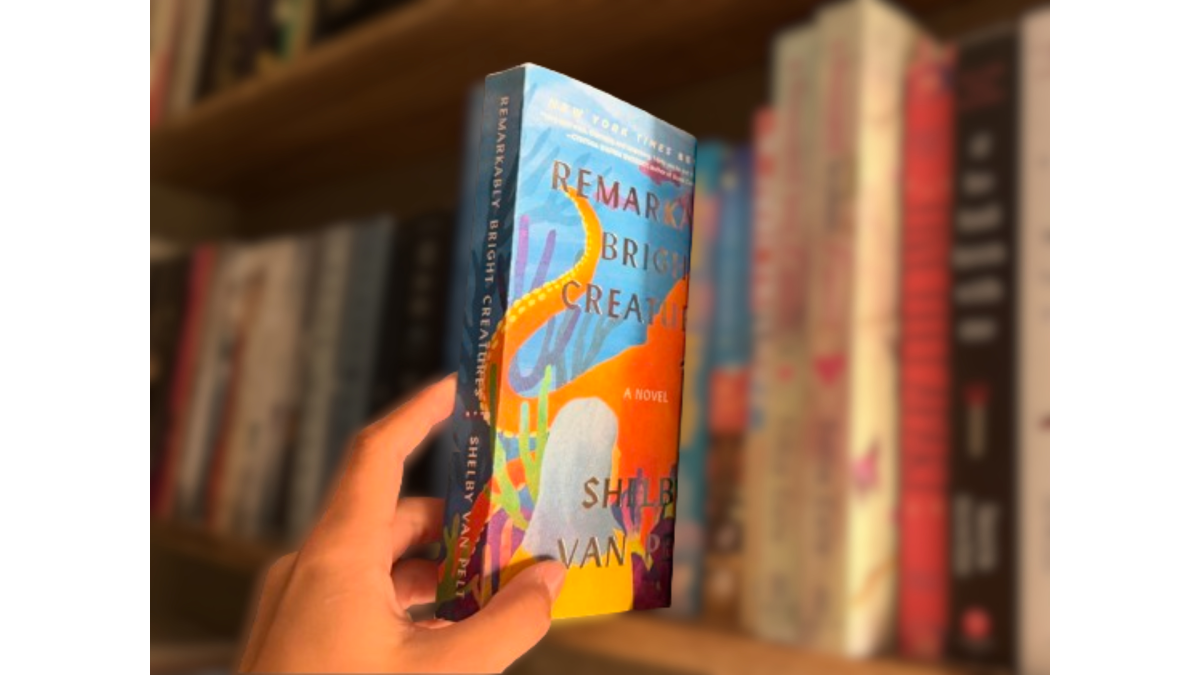
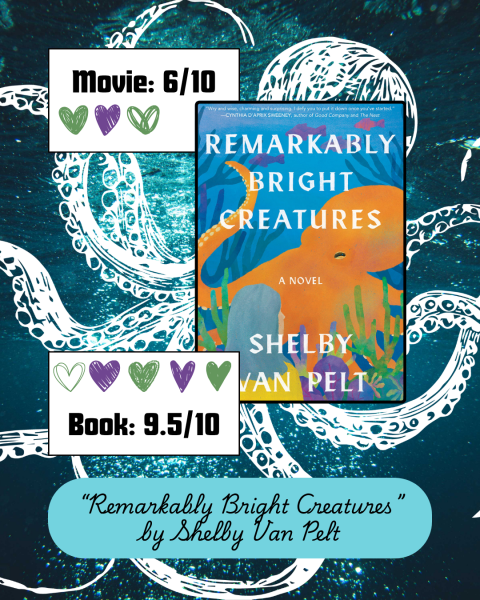
“Remarkably Bright Creatures” by Shelby Van Pelt is a novel that feels ancient and profound in a world full of books written for marketability and audiences. Van Pelt uses an elderly character named Tova Sullivan, a thirty-year-old man named Cameron Cassmore, and a great pacific octopus as vessels for her themes of grief and loss.
Van Pelt’s choice to use many different types of characters in many different walks of life and grief to demonstrate that no matter where a person is in their journey, there is always more life to live. There is always time to grow.
Tova Sullivan
Tova is an especially great character to portray this theme. She is seventy years old, has lost so much in her life, and works at an aquarium because “It was something to do.” That phrase is repeated from her lips so many times throughout the story. Tova doesn’t view her time as something she can use to be happy; She sees it as loose change at the end of her life that she might as well make use of.
Tova’s son Erik haunts the narrative through his unexpected disappearance and presumed suicide when he was 18. Tova also lost her husband, Will, to cancer a few years before the story takes place. All of these endings have shaped her subconscious viewpoint that her life is over, and there is nothing more to add to her story.
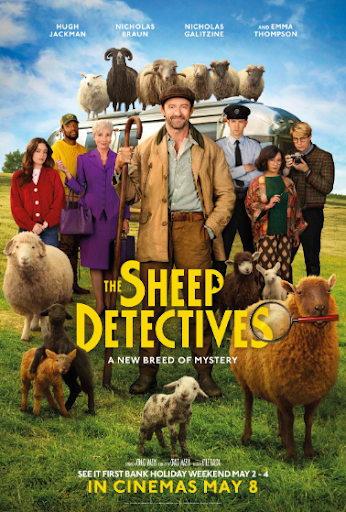
One of the most interesting differences between the movie and the book is the lack of an inciting incident in the movie. Van Pelt wrote Tova’s estranged brother’s death into the very beginning of the novel, while the movie removed the detail completely.
This renewal of grief in Tova’s life in the book is the final straw that convinces her there is no life or happiness left to experience. She puts her father’s house on the market and applies for a nice nursing home.
During her packing and sorting through her things, she finds her Dala horses. The movie introduces this symbol by displaying the Dala horses and having actress Sally Field stare lovingly at the five remaining pieces. This already shifts Tova’s character in the movie drastically from her book counterpart because though Tova is sentimental, she is more practical.
Book Tova casually tosses photos and memorabilia without a second thought because she believes there’s no more use for them. It is a quiet, monumental moment in the book when Tova finds the Dala horses in storage and saves them.
This small action, about halfway through the book, shows the change she has undergone already. It takes Tova until the very end to ask her friends for help, which shows her realization that her life isn’t over yet. Even though she is 70, Tova will find family and happiness when she once felt grief was the only thing left.
However, her irrational fear of being a burden and inconveniencing her friends goes mostly ignored in the movie until Tova asks her friends for help and walks away babbling on about how she doesn’t want to be a burden.
This scene not only includes Tova asking for help in a way that was out of character, but it also includes a breakdown from one of her friends who miraculously convinces her she isn’t a burden. Meanwhile, it takes the whole book for Tova to unlearn her internal belief as it is being challenged by Cameron, Marcellus, and her friends.
Marcellus – The Great Pacific Octopus
The movie introduces Tova through Marcellus’ dialogue. He seems to already have a fascination with “The cleaning lady,” and Tova also speaks to him in a full conversation in the opening scene. However, Marcellus didn’t just devote himself to Tova because she cleaned the gross fingerprints from his tank.
Marcellus was a bored octopus, living for his nighttime scavenges of the other tanks. He talked about food and delicacies as though it were the most interesting part of his day. Even when he gets stuck in the cords under the office desk, he hasn’t created a close enough bond with Tova to allow her to touch him. It took a lot of coaxing to convince Marcellus that she was going to help him.
It’s very important that Marcellus was living a sort of meaningless life because he gained purpose through helping Tova. In the book, when Cameron starts working at the aquarium while Tova is taking a break for her injury, Marcellus notices immediately what is so unnoticeable to the human eye.
Cameron and Tova are related. The night Tova lost her son, he and his girlfriend conceived Cameron. He tells the reader his observations and explains his plan to fill the voids in their hearts with each other. Marcellus only has to find a way to tell them. Not only is this supporting the theme that happiness and home after loss is possible for Tova and Cameron, but it shows the journey the octopus goes on after he had already accepted his death in his tank.
The movie changes this delivery, using foreshadowing and ominous lines from Marcellus to build up the tension instead. This doesn’t necessarily change the theme in the movie, but it impacts the unity Van Pelt cultivates by keeping Marcellus’ purpose in the story a mystery until the end.
Another piece removed from the book was Marcellus’ multiple attempts to show Tova her friendship with Cameron. The movie makes it seem like he’s failed his final goal in life when he’s laid out a lot of the foundation for Tova to finally understand.
When Marcellus is released into the ocean to spend his last few days in his home, the movie literally takes lines from his narrated chapter. One of the few accurate minutes from the entire movie is the last, really driving home the theme regardless of everything the directors removed and replaced.
Cameron Cassmore
No backstory was revealed initially for Cameron. The movie throws his character at the audience without any of the important leading events. The old van he drives in both forms of media breaks down, however, it symbolized so much more in the book.
In the movie, he inherited this van from his flaky mom, who overdosed in said van. While this loss is still a good motivator for Cameron to move to Sowell Bay, it changes the meaning and backstory to Cameron’s adventure.
Book Cameron bought the van for $1000 as his first decision in Sowell Bay, not expecting it to last very long. Much like Cameron expected his visit to be short, both the van and Cameron lasted in Sowell Bay longer than expected. Making Cameron inherit the van in the movie takes away from the comparison and the representation of him building his own life.
Cameron is in Sowell Bay to find his father, who was never present in his life. He doesn’t even technically know who he is, but Cameron has a name: Simon Brinks. In the movie, Tova and Cameron take a road trip to Brinks’ “House.” This added scene is both good and bad because it allows Tova and Cameron to build camaraderie, but it completely changes Tova’s character in the process.
Tova helps with Cameron’s crush, directly calling her and helping set up a date. This is completely out of character because Tova is very clear that she likes to stay out of other people’s business. Tova also confronts a man who pulls a gun on her, a scene that would never happen in the book, as Tova is majorly against confrontation, but ultimately, that scene was just to keep the story interesting rather than support the message.
There are plenty of other scenes completely made up for the movie that vaguely reference concepts from the book. For example, Avery and Cameron have a miscommunication in the book thanks to Avery’s teenage son, while the movie makes Cameron physically walk out on her.
This is during a huge mental breakdown after having a conversation with Simon Brinks, saying he moved here for nothing, Brinks wasn’t even his dad. Cameron says, “I’m tired of miscommunications.” As he proceeds to drive out of Sowell Bay, buy a pack of cigarettes and revert back to his old, unreliable self (which was also not established in the movie).
Cameron has a short chapter where he’s driving. It’s assuming he is driving away still until a minor tone shift, and Van Pelt narrates Cameron throwing away the pack of cigarettes. Not only does this highlight the omniscient narrator picking and choosing details to show growth, but it reveals at the end of the chapter that Tova has impacted him, that he does want to end things “The right way.”
Regardless of his bright, loud relapse towards the end, Cameron went looking for his father with selfish intentions, hoping to guilt trip his dad into giving him money, not caring about having a relationship with him. He stayed, having found his family and lost sight of his original agenda, money. Because truly, Cameron wanted connection and love more than any child support he claimed to desire.
Themes of change
It is very important that, in the end, Tova still sells the house. Not to complete the loss and add more grief, but to demonstrate how moving on and continuing in life is still possible after endings.
May is senior season, students experience one of a few big changes that occur in their lives. They leave the high school they have gone to for numerous years, the friendships they have created, the roads they drive every day, and maybe even their family.
But they are also going to college, trade school, the military, or wherever they choose to go. “Remarkably bright creatures” is a reminder that with every end comes a new beginning.
This book gets a 9/10 for being a classic, poetic novel. While the movie gets a 6/10 for the inaccuracies, it was able to retain the theme.