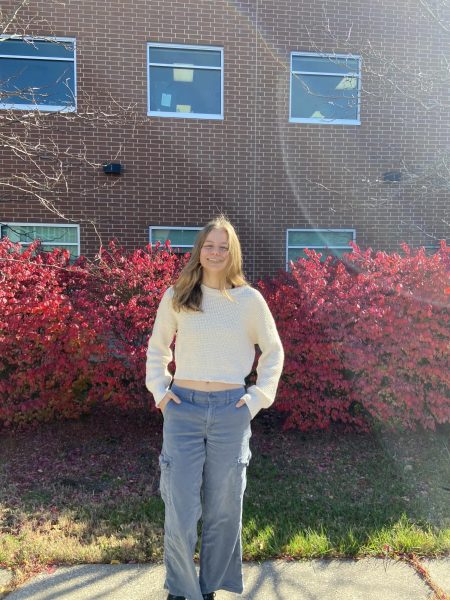





![Sophomore Lily Bell posing as a player in the senior assassin game. Seniors participating in the game eliminate others by squirting them with a water gun, and can wear goggles for immunity against others. “People did have to go out and buy [water] guns, but most people have the googles at home, but you don’t even have to use a gun, you can use water of any sort,” senior Gwyn Christensen said.](https://ahstalonnews.com/wp-content/uploads/2026/05/unnamed-1-1-900x1200.jpg)

![The shadows against a captivating blue are a nod to the “Catch Me If You Can” musical poster, both for this performance and the blue from the Broadway show. The detectives in this scene are at shooting practice, in preparation for when they finally encounter Frank Abagnale Jr. “We always say our motto is ‘theater is a team sport,’ and really just emphasizing to our students that everyone is welcome in the drama department. There's always a role for you, whether or not, on stage or behind the scenes, in the costume shop, in the scene shop. [There are] all sorts of different things that go into bringing a show to life. So we love our drama hawks and welcome everyone to drama,” Drama Director Mollie Jo Blahunka said.](https://ahstalonnews.com/wp-content/uploads/2026/04/cmiyc-1200x800.jpg)

![Henry, Emily (2021). People we meet on vacation [Book cover]. Berkley Books. Image used under fair use for purposes of commentary and review. Haley, Brett (2026). People we meet on vacation [Movie poster]. Movie poster courtesy of 3000 Pictures and Temple Hill Entertainment. Made by Adilyn Hoop using Canva.](https://ahstalonnews.com/wp-content/uploads/2026/01/vacay1.png)







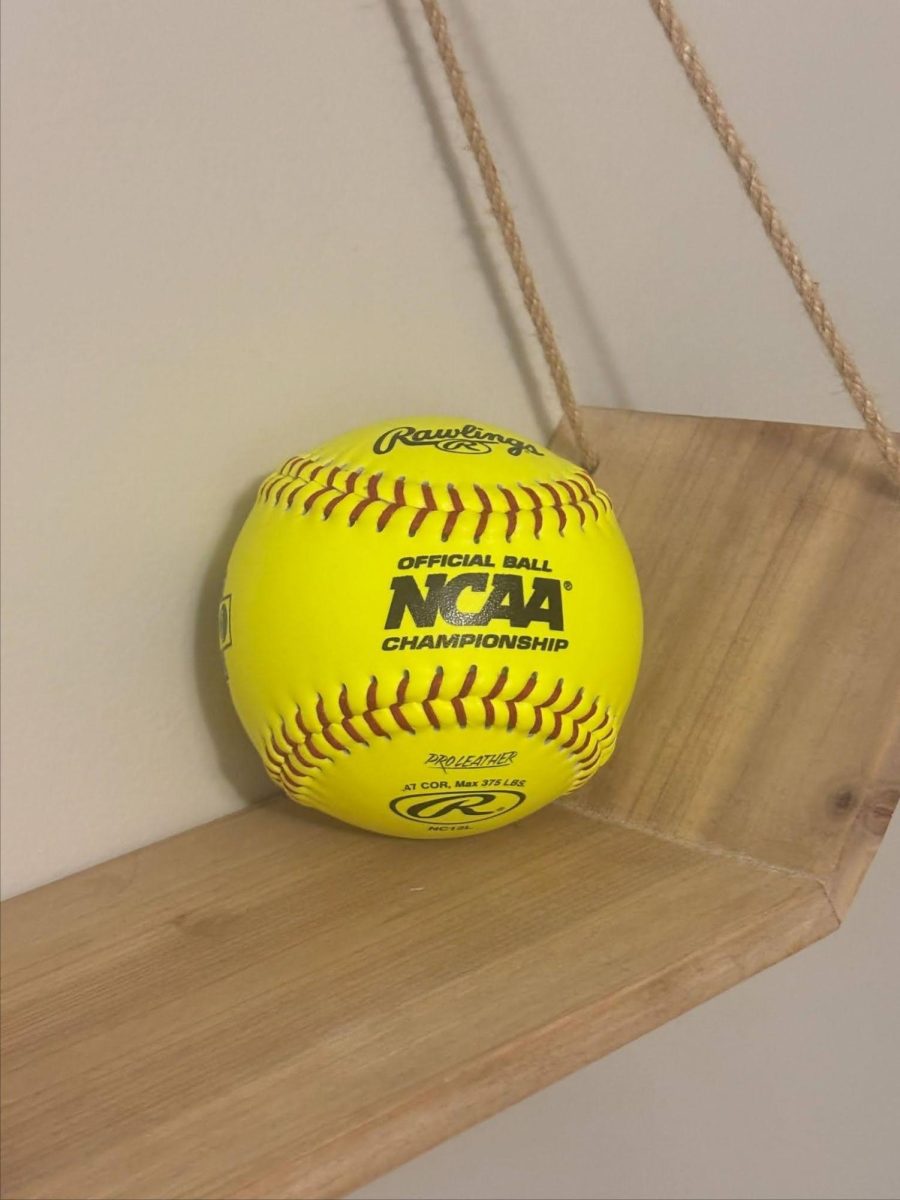

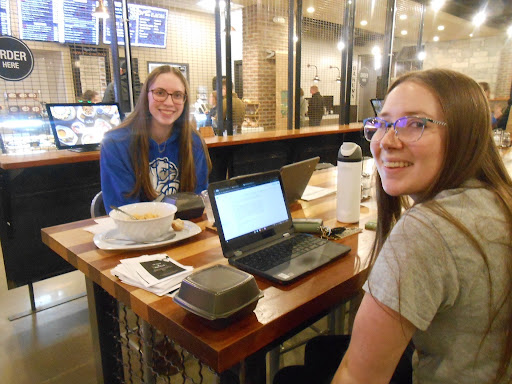
![Lockhart, E. (2025). We fell apart [Book cover]. Delacorte Press. Image used under fair use for purposes of commentary and review. The newest book in the “We were liars” collection was released Nov. 4.](https://ahstalonnews.com/wp-content/uploads/2025/11/wefell1.png)










![A Group of PEOPEL PE students and helpers set up an obstacle course during class. The “Amazing Race” unit had started in PEOPEL PE where the students and helpers got to compete in a variety of different activities and games. “We try our best to make [inclusion] a school-wide event, but it's just so much more different when you actually engage with the students hands-on and actually get to know them as people.” Sophomore Bree Christensen said. Photo Taken by Ada McNulty.](https://ahstalonnews.com/wp-content/uploads/2026/05/unnamed-12-1200x900.jpg)












“Speak” is a book where the main character doesn’t speak. Grabbed by the rough hand of a deeply traumatic event, Melinda Sordino is pulled under the waves of depression, is alienated by her peers, has no one to turn to during her freshman year of high school, and refuses to say a word about it all.
Author Laurie Halse Anderson wrote this book in 1999, and the relevance remains 26 years later.
This 198-page piece does a wonderful job of using a first-person perspective to convey how depression and isolation impact Melinda’s overall interpretation of the world. However, when looking through this lens, the story seems almost uninteresting because of the author’s choice to really encapsulate her point of view in the style of writing.
In her depression, the world and even her friends aren’t entertaining.
Tone and its impact
The parents and teachers treat Melinda’s depression like she is just a teenager and her dramatic years have arrived. A majority of her peers are written similarly. I really like this decision because it forces the reader, who may or may not have experienced this before, to feel alone and as unimportant as Melinda feels throughout this book.
“Speak” is organized in semesters, like a lot of students’ minds, and it begins on the first day of her freshman year. In “The First Marking Period” (Part One), Melinda is completely alone. All of her old friends ignore her because of what she did (which is not made known to the reader until much later), and she has to navigate the big, new high school by herself.
Anderson adds Melinda’s grades at the end of each marking period, very abruptly cutting off whatever she was initially feeling or experiencing. This setup allows the reader, if they are no longer in school or simply view the world differently, to truly step into Melinda’s world and see how she perceives time through the system built around her, not for her.
Effective storytelling
On the first day of school, she gets mashed potatoes splattered all over her as she’s searching for a place to sit during lunch. Melinda leaves the cafeteria with her shirt lumpy and sodden. She could not just stand there while the room was echoing with laughter.
Mr. Neck, her social studies teacher, finds her in the hallway. He tells her ‘exactly’ what she needs to hear.
“Mr. Neck makes a note in his book. ‘I knew you were trouble the first time I saw you. I’ve taught here for twenty-four years and I can tell what’s going through a kid’s head just by looking in their eyes. No more warnings. You just earned a demerit for wandering the halls without a pass,’” Anderson wrote in the early pages.
There’s no dialog tag in that excerpt because Melinda sees no point in including it, it’s too much effort to acknowledge the person she already mentioned is now the one speaking. This is parallel to the way she has no energy to tell anyone the truth.
The author’s voice is very distinct in the way she articulates sentences to show Melinda’s in-depth and almost funny interpretation of the world around her. Meanwhile, “Hairwoman” is how she refers to her English teacher because of her frizzy and untamed hair.
Uninterested in what her story is, Mr. Neck punishes Melinda for what is assumed of her. Thirty-eight-year-old Anderson saw what other adults could not (and some still cannot) see. These assumptions help no one.
Intentional character distinction
There is one teacher who hears her. Melinda’s art teacher, Mr. Freeman, gives everyone the same year-long assignment: to capture one subject in as many different art forms as they can. The class learns cubism, sculpting, and painting, to name a few. What students are supposed to focus on is determined by papers mixed in a broken globe. Their fate is written on one of the many paper slips.
Anderson writes, “Tree? It’s too easy. I learned how to draw a tree in second grade. I reach in for another piece of paper. Mr. Freeman shakes his head. ‘Ah-ah-ah,’ he says. ‘You just chose your destiny, you can’t change that.’”
He helps Melinda’s class throughout the school year find emotion and creativity to make something meaningful. I love this underlying theme that’s there to remind us that school should be about growing our creativity. Yeah, sure, some of her peers did not buy into the whole “destiny” thing, but it only needs to help one.
Melinda finds a person, Heather, who allows her presence. She sort of floats through life with that minimal comfort, still never speaking a word. This, of course, is not support at all. Heather confides in her but never really cares that she doesn’t speak. In that way, she’s written as the villain, but in my opinion, she is just an ambitious freshman who does not quite understand the weight of what Melinda is going through.
Heather cannot really be at fault when it takes until the “Third Marking Period” for the principal to take notice.
A voice for teenage struggles and acceptance
The meeting with herself, her parents, the principal, and the guidance counselor is productive in that afterwards, Melinda actually goes to school and tries to understand the concepts simply so she will not have to sit through another meeting where her mother could say something like this again: “‘She’s jerking us around to get attention.’”
Melinda thinks, “Would you listen? Would you believe me? Fat chance.” Because every assumption the adults make about what kids are feeling invalidates the emotional turmoil they are actually experiencing.
Why speak if no one cares to listen?
Anderson carries this main theme of presumptions in adults worsening the mental state of kids beautifully throughout the book. The dark and blank voice used by those adults allows the open-mindedness of Mr. Freeman to shine brilliantly. He stays after school to help Melinda, gives her extra textbooks and resources to inspire her, and most importantly, he knows she has something to say.
Everyone has something to say if you are willing to listen. And Mr. Freeman gives her a way to organize her thoughts.
Anderson shows the process of realizing and accepting what happened to her in a way that’s healthy and informative to readers who might need the guidance. Though Melinda’s still ashamed of how she was taken advantage of, she’s finding clarity and furthermore, what she has to say.
Overall, this book gets 8/10 for its wonderful message and effective use of point of view.