






![Sophomore Lily Bell posing as a player in the senior assassin game. Seniors participating in the game eliminate others by squirting them with a water gun, and can wear goggles for immunity against others. “People did have to go out and buy [water] guns, but most people have the googles at home, but you don’t even have to use a gun, you can use water of any sort,” senior Gwyn Christensen said.](https://ahstalonnews.com/wp-content/uploads/2026/05/unnamed-1-1-900x1200.jpg)
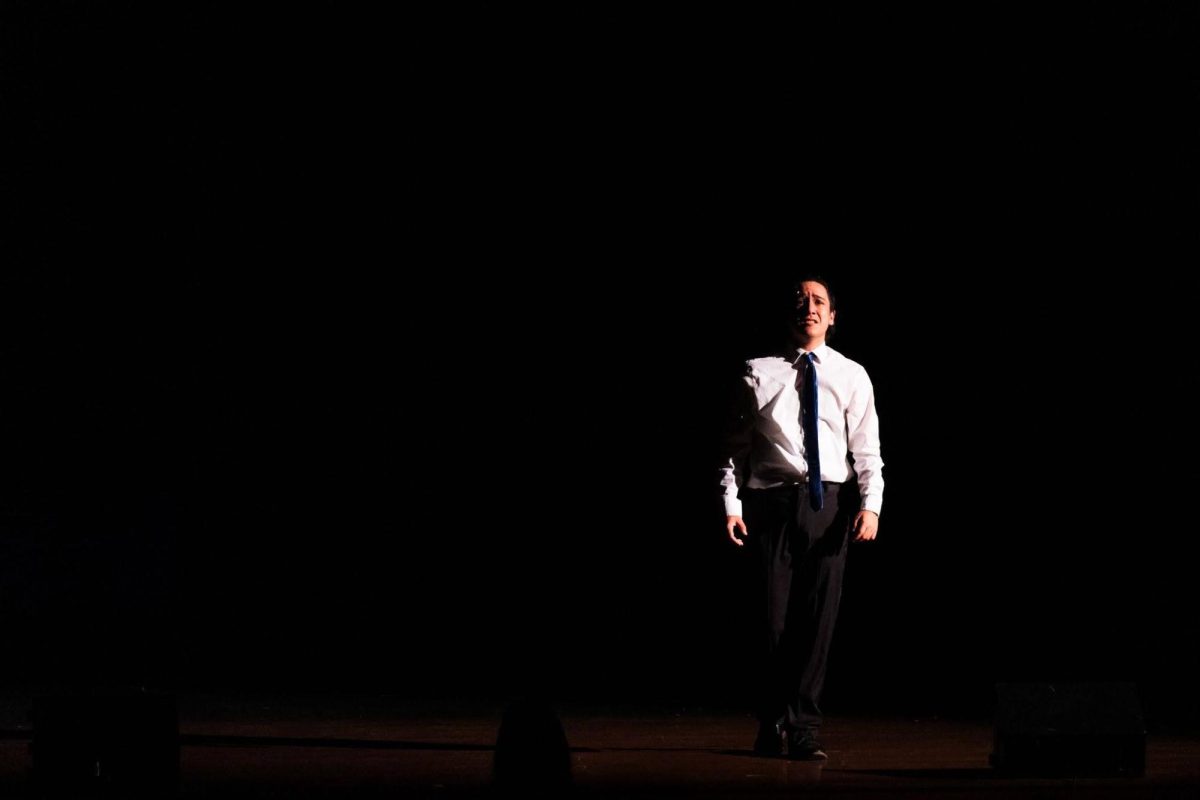
![The shadows against a captivating blue are a nod to the “Catch Me If You Can” musical poster, both for this performance and the blue from the Broadway show. The detectives in this scene are at shooting practice, in preparation for when they finally encounter Frank Abagnale Jr. “We always say our motto is ‘theater is a team sport,’ and really just emphasizing to our students that everyone is welcome in the drama department. There's always a role for you, whether or not, on stage or behind the scenes, in the costume shop, in the scene shop. [There are] all sorts of different things that go into bringing a show to life. So we love our drama hawks and welcome everyone to drama,” Drama Director Mollie Jo Blahunka said.](https://ahstalonnews.com/wp-content/uploads/2026/04/cmiyc-1200x800.jpg)
![Henry, Emily (2021). People we meet on vacation [Book cover]. Berkley Books. Image used under fair use for purposes of commentary and review. Haley, Brett (2026). People we meet on vacation [Movie poster]. Movie poster courtesy of 3000 Pictures and Temple Hill Entertainment. Made by Adilyn Hoop using Canva.](https://ahstalonnews.com/wp-content/uploads/2026/01/vacay1.png)







![Lockhart, E. (2025). We fell apart [Book cover]. Delacorte Press. Image used under fair use for purposes of commentary and review. The newest book in the “We were liars” collection was released Nov. 4.](https://ahstalonnews.com/wp-content/uploads/2025/11/wefell1.png)









![A Group of PEOPEL PE students and helpers set up an obstacle course during class. The “Amazing Race” unit had started in PEOPEL PE where the students and helpers got to compete in a variety of different activities and games. “We try our best to make [inclusion] a school-wide event, but it's just so much more different when you actually engage with the students hands-on and actually get to know them as people.” Sophomore Bree Christensen said. Photo Taken by Ada McNulty.](https://ahstalonnews.com/wp-content/uploads/2026/05/unnamed-12-1200x900.jpg)







After 15 years in the making, “Tron’s” classic neon is racing back onto the big screen in the latest installment of the trilogy. The newest addition to Disney’s “Tron” trilogy, “Tron: Ares,” directed by Joachim Rønning and released on Oct. 10, enters a new, exciting world by flipping the classic “Tron” formula. Rather than humans entering the digital world, Rønning uses the relevance of artificial intelligence to explore the idea of a digital program entering the real world.
One thing “Tron: Ares” doesn’t flip the script on is the trilogy’s pattern of dazzling visual design and immersive soundtrack, weakened by underwhelming and uneven writing and character development. Ares continues that with an engaging neon spectacle that experiences similar narrative and character limitations as the first two.
The “Tron” franchise
In an era of developing technology and the innovation of artificial intelligence, the “Tron” movies are more relevant than ever. The “Tron” franchise started in 1982 with the original “Tron” directed by Steven Lisberger. The story follows programmer Kevin Flynn, who attempts to hack into the system of an executive at ENCOM (Engineering for Computational Mutations) named Ed Dillinger and retrieve files that were stolen and taken as his own. He is pulled into a digital world he created called The Grid. Flynn fights back against Dillinger’s tyrannical master control program and his second in command, Sark, through challenges within the Grid alongside a program named Yori and a Security program named Tron.
28 years later, in 2010, we revisit the grid in “Tron Legacy”, directed by Iowa native Joseph Kosinski. This film follows Kevin Flynn’s son, Sam, who grew up without his father after Kevin’s disappearance in 1989. After a strange message leads him to his dad’s Arcade, he investigates the disappearance and is pulled into the same grid his father created and has been trapped in for 20 years. With his dad and the algorithm Quorra by his side, they try to escape the grid from the hands of Clu, a program turned evil and set on creating a flawless system by getting rid of any imperfect programs by any means necessary, and deliver peace back to the grid.
“Tron: Ares”
Now, more than a decade later, in the age of AI and digital innovation, “Tron: Ares” follows a sophisticated security program/soldier, Ares, played by Jared Leto, as he embarks on a dangerous mission and is transported from the digital world known as The Grid into the real world.

The film’s conflict is driven by two tech companies and their chase to achieve the permanence of AI programs in the real world, as a program can only be on earth for 29 minutes before “derezzing” / dissolving, the digital world equivalent of death.
The story follows Ares as he tries to complete his directive in a new reality and has to face the struggle of loyalty to his user and creator, and whether he’s more than just code.
With the new approach to the “Tron” trilogy, “Tron: Ares” builds upon some past themes and introduces new ones. The original “Tron” questioned authority and the relationship between creator and creation, and “Tron Legacy” examines the dangers of perfectionism and its unattainability.
Ares shifts to a focus on the human struggle, emotions, and free will. In the film, Ares is deleted and restored over and over again. Throughout the film, he starts to question his directives and purpose, and showcases the human desire for free will even in artificial intelligence.
Ares begins to show signs of malfunction as he starts to comprehend emotion and ignores his directive for the betterment of society, and makes his own choices. When he is told he will not be revived again and is on his final life, we can see Ares being freed as he doesn’t have dependence on being brought back, and he now has free will and choices have an impact. Through these common human struggles, the film explores the idea of identity and human desire for freedom.
“Tron: Ares” continues the legacy of the franchise’s excellent visual design. Because of the real-life setting, most of the scenes are set in the real world, and bringing the digital world out is really hard, but they executed it perfectly by realistically integrating digital elements like the light cycles and ships called recognizers, and providing the audience with an immersive and realistic experience. When they switch between the real world and the grid, the visual continuity, while also having a distinguishable look, is very important and admirable.

The music score composed by Nine Inch Nails is brilliant and equally effective at setting a tone and controlling the tension and energy throughout the film. The electronic and energetic nature ties into the digital feel of the movie and follows the pacing really well, and immerses the audience with every note.
The acting performances are also very solid, with Greta Lee delivering an impressive portrayal of Eve Kim, who balances the ambition of a business CEO with a heart and empathy. Jared Leto’s performance embodies the role of a stoic program with a gradual growth of emotion. However, Leto’s emotionless performance can make it hard at times to distinguish the acting from the character’s manufactured nature, and makes you wonder if it’s the writing, the acting, or the character.
As “Tron: Ares” follows in the footsteps of its predecessors in the strengths of visual design and soundtrack, it also follows in the footsteps of shallow and undeveloped story and characters, which felt rushed in some parts.
While the film brings in relevant and intriguing concepts about AI, freedom, emotions, and the struggles of human life, certain points of the movie, such as Ares’ motives behind his emotional switch or fast-paced shifts in action or emotion without explanation or understanding, make it feel underdeveloped, and the characters start to feel flat and lack depth. The pacing was pretty good and kept you intrigued.I wish the story had gone a little deeper around the rebellion of Ares against the system as he starts to gain independence and emotional understanding, and allowed the audience to fully connect with Ares as he went through his journey from program to emotionally conscious.

“Tron: Ares,” through its strengths and weaknesses, delivers a visually intriguing and enjoyable addition to the franchise. It continues the series’ standard of stunning visuals, immersive sound design, and innovates with the integration of digital elements into a real-world setting. Like the previous films, some of the characters’ development and storytelling are a little uneven, but through the steady pacing, the film stays engaging through all 119 minutes.
Though “Tron: Ares” might not achieve perfection, none of the “Tron” movies have. All have had low ratings from critics and initial releases, but over time have won over audiences and become loved cult classics. I believe the same is true with “Tron: Ares”, as it may get low ratings from critics, but I believe “Tron: Ares” is a suitable and exciting watch for both “Tron” fans and those new to the “Tron” universe.
