
![Sophomore Lily Bell posing as a player in the senior assassin game. Seniors participating in the game eliminate others by squirting them with a water gun, and can wear goggles for immunity against others. “People did have to go out and buy [water] guns, but most people have the googles at home, but you don’t even have to use a gun, you can use water of any sort,” senior Gwyn Christensen said.](https://ahstalonnews.com/wp-content/uploads/2026/05/unnamed-1-1-900x1200.jpg)
![The shadows against a captivating blue are a nod to the “Catch Me If You Can” musical poster, both for this performance and the blue from the Broadway show. The detectives in this scene are at shooting practice, in preparation for when they finally encounter Frank Abagnale Jr. “We always say our motto is ‘theater is a team sport,’ and really just emphasizing to our students that everyone is welcome in the drama department. There's always a role for you, whether or not, on stage or behind the scenes, in the costume shop, in the scene shop. [There are] all sorts of different things that go into bringing a show to life. So we love our drama hawks and welcome everyone to drama,” Drama Director Mollie Jo Blahunka said.](https://ahstalonnews.com/wp-content/uploads/2026/04/cmiyc-1200x800.jpg)

![Henry, Emily (2021). People we meet on vacation [Book cover]. Berkley Books. Image used under fair use for purposes of commentary and review. Haley, Brett (2026). People we meet on vacation [Movie poster]. Movie poster courtesy of 3000 Pictures and Temple Hill Entertainment. Made by Adilyn Hoop using Canva.](https://ahstalonnews.com/wp-content/uploads/2026/01/vacay1.png)





![Lockhart, E. (2025). We fell apart [Book cover]. Delacorte Press. Image used under fair use for purposes of commentary and review. The newest book in the “We were liars” collection was released Nov. 4.](https://ahstalonnews.com/wp-content/uploads/2025/11/wefell1.png)



![A Group of PEOPEL PE students and helpers set up an obstacle course during class. The “Amazing Race” unit had started in PEOPEL PE where the students and helpers got to compete in a variety of different activities and games. “We try our best to make [inclusion] a school-wide event, but it's just so much more different when you actually engage with the students hands-on and actually get to know them as people.” Sophomore Bree Christensen said. Photo Taken by Ada McNulty.](https://ahstalonnews.com/wp-content/uploads/2026/05/unnamed-12-1200x900.jpg)





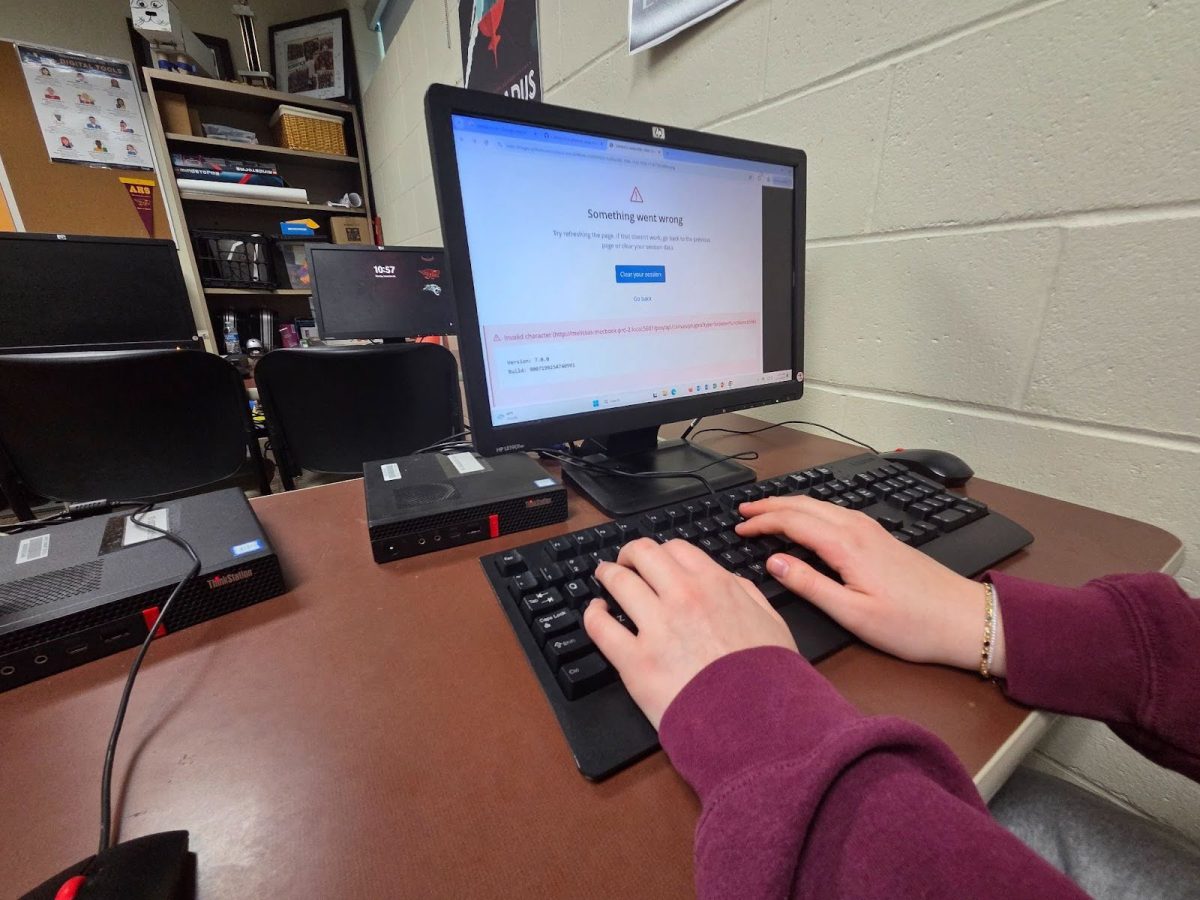
From the media center to projectors in classrooms, schools have entered a digital age. When servers go down, so do students’ lives. On Tuesday, Nov. 18, Cloudflare experienced an outage lasting about four hours. Affected platforms include Canva, School Newspapers Online, Open AI, Spotify, and X.
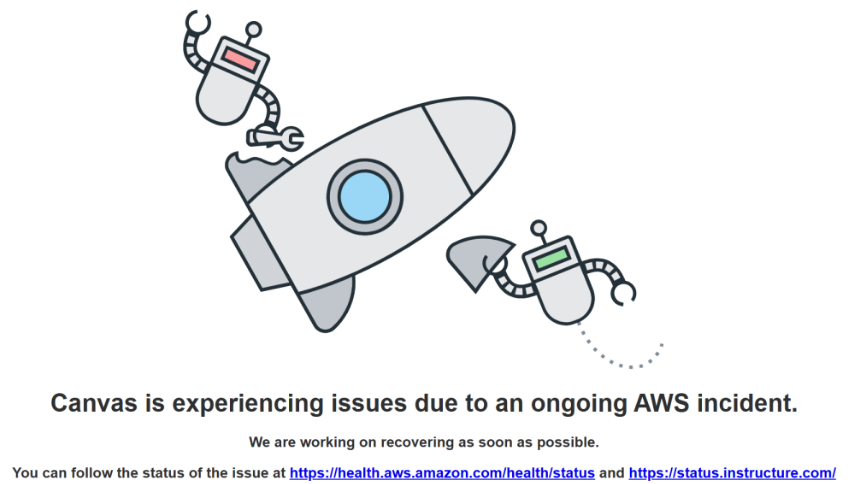
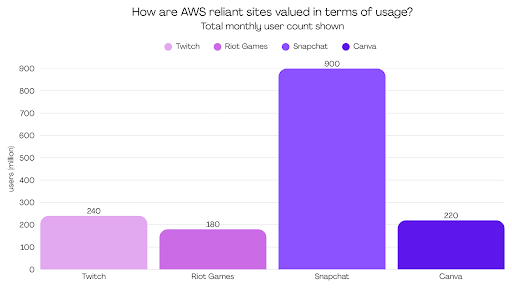
This crash is similar to when Snapchat, Canva, Fortnite, and more blackout for fifteen hours due to a global outage. The outage was caused by Amazon’s Web Services (AWS) suffering connectivity issues. During this time, Ankeny High School (AHS) was also unable to access Canvas, an online-classroom system, halting learning for many students.
Technology integration through the years
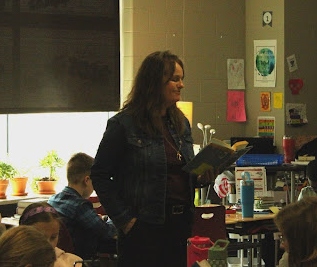
For reportedly many teachers, technology wasn’t always the centerpiece of learning. Physical resources replaced what a single Chromebook can now cover. To solve problems, it didn’t include the solution of a simple Google search. Computer Science teacher Jennifer Poole remembers this very different classroom.
“When I was in school, we primarily used textbooks,” Poole said. “We didn’t get internet access until sixth grade, and it was one computer in the classroom. You had to sign up for a 15-minute slot just to use it.”
Before search engines and tutorial videos, problem-solving depended entirely on people.
“If you didn’t know how to beat a level in a game, you either figured it out yourself or found someone who already beat it,” Poole said. “You just talked to each other more because that was the only resource we had. Now, we have the internet, which is essentially that same idea multiplied by a million.”
Students today, Poole says, live on the opposite end of that spectrum. This is where access is constant, immediate, and overwhelming.
“With everything online, there’s access to more than ever, and that can be great,” Poole said. “But too much choice makes people go back to asking humans again, ‘Hey, I want to find a good restaurant, but I don’t know if the reviews are real or bots, and I don’t know if the restaurant is possibly removing bad reviews.’ People don’t know what to trust.”
Poole fears that with too many choices, people get overwhelmed and shut down.
“Even though you can find anything on the internet, it’s kind of blocked curiosity in a lot of ways because there’s just so much out there,” Poole said.
AWS crash effects
On the day of the AWS outage, Oct. 25, some systems at AHS and across the district worked, but many reportedly didn’t.
“Canvas was down,” Poole said. “But other technology still worked, so we didn’t have a ton of disruption. Still, when access to something you use every day suddenly disappears, it feels like ‘Well, now what’?”
For students, the crash meant assignments posted online were inaccessible, resources couldn’t be reached, and teachers were left without their usual tools.
“In other sectors, some said they couldn’t get any work done that day. It was like a digital snow day,” Poole said.
The outage revealed a new angle on our dependence on technology. Seventy-eight percent of companies report incorporation of AI into their daily operations, despite major advancements being new.
“We’re very reliant on technology,” Poole said. “It’s made us way more efficient and collaborative than we’ve ever been, but we’re also less patient, and we’re also not sure what to do with ourselves without it.”
Students’ perspective: reliance, overuse, and the future
Students seemingly felt the outage sharply. Many reportedly experienced firsthand what it means when the tools they depend on stop working.
“I depend on tech almost every day at school,” junior Rissa Masters said. “There’s always a class where I need my Chromebook, and when it doesn’t work, the whole plan has to change. It affects how the class runs and what we can do for the day.”
During the outage, schoolwork became nearly impossible, considering Canvas is the hub for most assignments.
“I wasn’t able to do my work for the day, and a lot of my classes had to change plans,” Masters said. “Sure, it felt fun at first, we didn’t have to do any work, but it was also really inconvenient when I actually needed to get something done.”
Like many students, Masters is aware of the digital overload that comes with having too much information at your fingertips.
“I wouldn’t say I’m overwhelmed, but it’s definitely a lot at times,” Masters said.
And trust online has fallen as AI-generated content becomes the norm. Recently, AI-generated videos using Sora AI have become popular.
“I’ve been seeing a significant amount of AI content, and it makes me trust what I see online even less,” Masters said. “I didn’t trust much before because people are unreliable, but now my trust has really been diminished.”
Masters expressed support for increasing hands-on learning and reducing reliance on screens in schools.
“I wish we had more hands-on activities. I came from a school where there was very little tech,” Masters said. “I’m glad I’m in a place where I know how to use tech, but I think it’s overused.”
Teaching students to adapt when systems fail
Poole says adaptability is now a core skill, and one she intentionally models in the classroom. Students constantly ask other students questions to resolve a problem.
“We have tech problems all the time. So, I’ll go student to student and help troubleshoot. Try turning it off and on, clearing cache and cookies, whatever the next step is,” Poole said. “We try to show that you can work through it. You just follow the steps.”
Poole said schools will likely need a balance between technology use and traditional tools such as textbooks.
“We swung really far into digital, especially during the pandemic, and people got tired of everything being on a computer. Students actually really enjoy hands-on things — legos, puzzles, snap circuits, books. There’s something about the tactile experience people miss,” Poole said.
The future of technology in daily lives
Keara Puetz, digital media marketer and influencer, explains how she fears that “AI is going to take over completely”
“Especially in influencing and social media, I already feel like nobody’s telling the truth anymore. Everything feels fake because people aren’t using their own voice,” Puetz said.
Despite her concerns, Puetz acknowledges how AI can help her stay organized and productive when dealing with deadlines, content demands, and mental health.
“I use ChatGPT way more now. Sometimes I’ll say, ‘Hey, give me a [social media] plan for the week,’ and in like five seconds it’s all mapped out,” Puetz said. “It can come up with strategies, captions, or help me communicate better. So there’s benefits, but the lines get blurred fast.”
Puetz’s reliance on these new, digital tools meant outages, like the AWS crash, could directly impact her work and income.
“Technology is great when it’s great, but it sucks when it sucks,” Puetz said. “If everything just crashed one day, that’s my whole job. I wouldn’t have access to anything I make money from.”
Barriers, Checks, and Balances: What Should Change?
Puetz believes stronger protections need to keep up with rapid digital growth.
“We need more storage, better systems, and better security,” Puetz said. “People get hacked too easily. Face ID isn’t enough. My twin can unlock my phone. AI and bots can hack you too.”
For her, younger generations will become the ones who shape and advance this new digital world.
“You guys grew up with technology. You have to know how to use it. Eventually, you’ll be the ones working with AI and bots directly,” Puetz said. “You’re the generation built for it.”
Still, authenticity remains a growing concern as AI-generated content floods social platforms.
“People literally take a Tiktok caption, put it into ChatGPT, and tell it to rewrite it,” Puetz said. “It’s basically stealing without stealing. And that scares me, because originality is already disappearing.”
Poole addresses how misinformation can just as easily bloom in this digital world.
“Having too much [information] everywhere, AI is like ‘Here, I’ll just give you an answer,’” Poole said. “Okay, that’s cool. But I don’t always know where AI is getting that information from. Sometimes it’ll tell me, sometimes it won’t.”
Between students navigating outages, teachers balancing digital and hands-on learning, and influencers rethinking authenticity in an AI-powered world, one thing is clear: technology has become the hub of modern life. Whether it is done correctly and safely is still up for debate.
“The biggest advantage is the sheer amount of possibility, but, the downside is there’s so much potential that it can be used in the wrong way,” Poole said. “When used correctly, technology is an amazing tool. But when it fails, or when we misuse it, it can create some big problems.”
