
![Sophomore Lily Bell posing as a player in the senior assassin game. Seniors participating in the game eliminate others by squirting them with a water gun, and can wear goggles for immunity against others. “People did have to go out and buy [water] guns, but most people have the googles at home, but you don’t even have to use a gun, you can use water of any sort,” senior Gwyn Christensen said.](https://ahstalonnews.com/wp-content/uploads/2026/05/unnamed-1-1-900x1200.jpg)

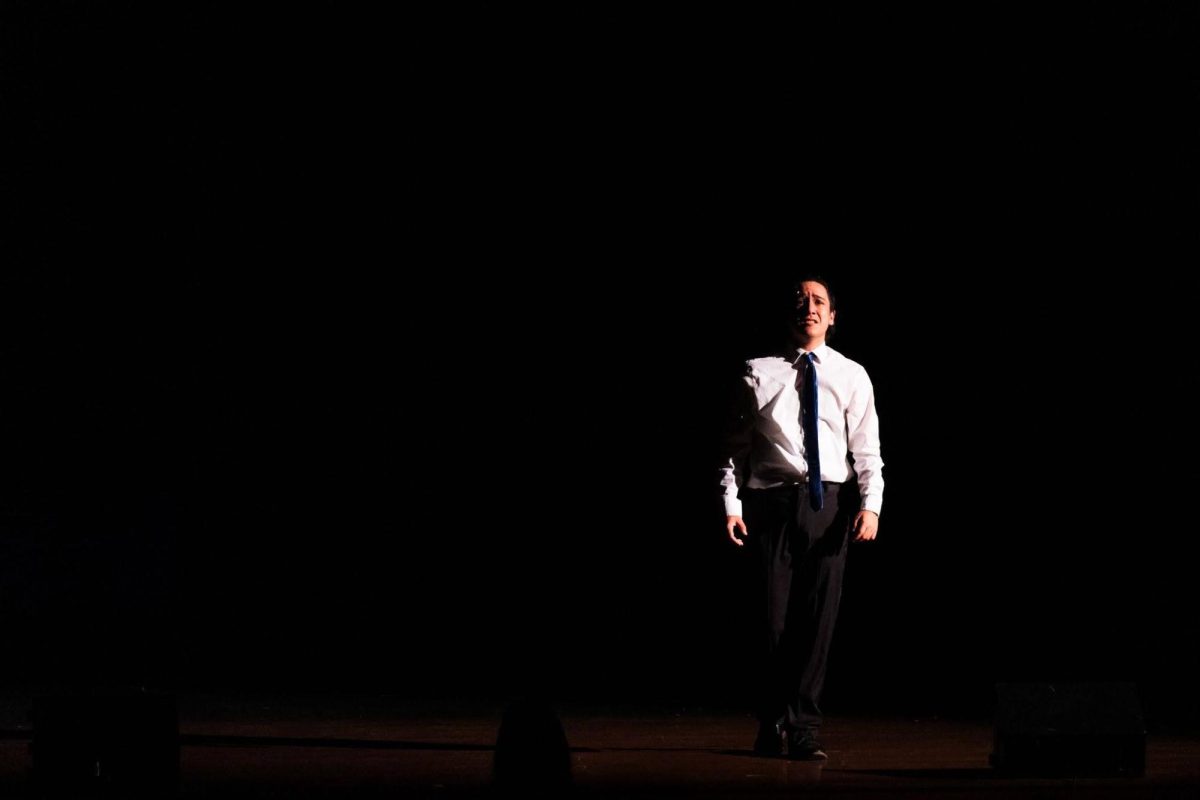
![The shadows against a captivating blue are a nod to the “Catch Me If You Can” musical poster, both for this performance and the blue from the Broadway show. The detectives in this scene are at shooting practice, in preparation for when they finally encounter Frank Abagnale Jr. “We always say our motto is ‘theater is a team sport,’ and really just emphasizing to our students that everyone is welcome in the drama department. There's always a role for you, whether or not, on stage or behind the scenes, in the costume shop, in the scene shop. [There are] all sorts of different things that go into bringing a show to life. So we love our drama hawks and welcome everyone to drama,” Drama Director Mollie Jo Blahunka said.](https://ahstalonnews.com/wp-content/uploads/2026/04/cmiyc-1200x800.jpg)
![Henry, Emily (2021). People we meet on vacation [Book cover]. Berkley Books. Image used under fair use for purposes of commentary and review. Haley, Brett (2026). People we meet on vacation [Movie poster]. Movie poster courtesy of 3000 Pictures and Temple Hill Entertainment. Made by Adilyn Hoop using Canva.](https://ahstalonnews.com/wp-content/uploads/2026/01/vacay1.png)






![Lockhart, E. (2025). We fell apart [Book cover]. Delacorte Press. Image used under fair use for purposes of commentary and review. The newest book in the “We were liars” collection was released Nov. 4.](https://ahstalonnews.com/wp-content/uploads/2025/11/wefell1.png)



![A Group of PEOPEL PE students and helpers set up an obstacle course during class. The “Amazing Race” unit had started in PEOPEL PE where the students and helpers got to compete in a variety of different activities and games. “We try our best to make [inclusion] a school-wide event, but it's just so much more different when you actually engage with the students hands-on and actually get to know them as people.” Sophomore Bree Christensen said. Photo Taken by Ada McNulty.](https://ahstalonnews.com/wp-content/uploads/2026/05/unnamed-12-1200x900.jpg)



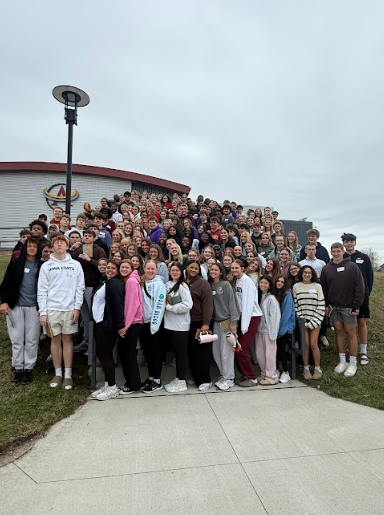
In classrooms at Ankeny High, students aren’t just learning math or English. Through the Mentors in Violence Prevention (MVP) program, they’re learning how to speak up when they see harmful behavior instead of staying silent or assuming someone else will step in. That focus on real situations and real choices is what makes MVP stand out to students and staff.
MVP is a student-led program built around the idea of being an upstander instead of a bystander. Students are trained to recognize harmful behavior and respond in ways that feel safe and realistic by leading discussions about bullying, harassment, abuse, discrimination, and bystander intervention.
According to school counselor and co-advisor Kelly Andrews, the goal is simple but powerful: “Mentors in Violence Prevention is a preventative program that essentially uses the bystander model to help teach students ways that they can respond to any given situation.”
Students learn different ways to act, including indirect responses like reporting concerns, and feel more confident in taking action. That idea of responding doesn’t always mean stepping in directly. “A lot of our students have mentioned that they feel more empowered to respond when they see things,” Andrews said.
That shift is already showing up around school. While there isn’t a lot of formal data yet, Andrews pointed out one clear change.
“We’re receiving multiple tips and reports about the same events,” Andrews said. “It’s not like events are increasing, but people are more apt to act on injustice or the situations that they see.”
In other words, students aren’t turning a blind eye to issues or problems they witness, and MVP plays a part in that. Mary Kate Leister, the school’s social worker and co-coordinator of MVP, sees the program as both a safety tool and a leadership opportunity.
“The point of the program is to help sport either abusive or harmful behaviors so that our community feels safe,” Leister said.
But beyond that, students also build leadership skills by teaching their peers. MVP mentors lead lessons, guide discussions, and practice speaking in front of others.
Leister said this gives students real experience, “They get to learn how to lead a classroom, almost like a student ambassador type role.”
These aren’t just small skills students learn; they’re things that will be used after high school too. Students build communication, leadership, public speaking, empathy, and decision-making skills while learning how to safely speak up, support others, and respond to harmful situations in real life. The topics MVP covers also push students to think deeply with lessons on consent, substance use, and peer pressure, often leading to more honest conversations.
Lesiter said these discussions matter because they connect directly to the lives of some students. Instead of being told what’s right or wrong, students are able to talk through situations and figure it out together.
These types of lessons tend to leave a longer-lasting impact on students compared to being talked at. For junior Akouvi Noglo, a first-year MVP mentor, that real-world focus is what makes the program different.
“A lot of the programs are kind of broad, but MVP is very specific with situations like consent and cyberbullying,” Noglo said.
That specificity changed how she acts in everyday life. Before MVP, Noglo shared that she might’ve stayed quiet in an uncomfortable situation.
She shared a moment when rumors were spreading about another student. Instead of ignoring it, she stepped in. “I ended up saying something. They should stop talking about it because it’s very serious and it was obviously hurting the person involved,” Noglo said. Even though her friends were taken aback, she knew it was the right thing to do.
That kind of response is exactly what MVP is trying to build. Still, the program isn’t perfect. Noglo pointed out that issues like online behavior are harder to control.
“Once it hits social media, it does get kind of hard to be able to give a direct consequence to the person who’s doing wrong,” Noglo said. “I feel like there can always be more that’s done about the situations.”
One of the biggest challenges MVPs face is getting people to recognize that the issues their lessons cover actually exist in real life, including in their own communities. Andrews explained that some students don’t think issues like harassment or dating violence happen at their school. That lack of awareness makes it harder to act. But once students start to understand what’s happening around them, they’re more likely to respond.
That’s where MVP tries to make a big impact on the student body. MVP mentors don’t just tell students what to do. They go beyond and help them notice, think, and act. Students choose to say something instead of nothing. And at Ankeny High, that shift is already showing.