


![Sophomore Lily Bell posing as a player in the senior assassin game. Seniors participating in the game eliminate others by squirting them with a water gun, and can wear goggles for immunity against others. “People did have to go out and buy [water] guns, but most people have the googles at home, but you don’t even have to use a gun, you can use water of any sort,” senior Gwyn Christensen said.](https://ahstalonnews.com/wp-content/uploads/2026/05/unnamed-1-1-900x1200.jpg)

![The shadows against a captivating blue are a nod to the “Catch Me If You Can” musical poster, both for this performance and the blue from the Broadway show. The detectives in this scene are at shooting practice, in preparation for when they finally encounter Frank Abagnale Jr. “We always say our motto is ‘theater is a team sport,’ and really just emphasizing to our students that everyone is welcome in the drama department. There's always a role for you, whether or not, on stage or behind the scenes, in the costume shop, in the scene shop. [There are] all sorts of different things that go into bringing a show to life. So we love our drama hawks and welcome everyone to drama,” Drama Director Mollie Jo Blahunka said.](https://ahstalonnews.com/wp-content/uploads/2026/04/cmiyc-1200x800.jpg)

![Henry, Emily (2021). People we meet on vacation [Book cover]. Berkley Books. Image used under fair use for purposes of commentary and review. Haley, Brett (2026). People we meet on vacation [Movie poster]. Movie poster courtesy of 3000 Pictures and Temple Hill Entertainment. Made by Adilyn Hoop using Canva.](https://ahstalonnews.com/wp-content/uploads/2026/01/vacay1.png)







![Lockhart, E. (2025). We fell apart [Book cover]. Delacorte Press. Image used under fair use for purposes of commentary and review. The newest book in the “We were liars” collection was released Nov. 4.](https://ahstalonnews.com/wp-content/uploads/2025/11/wefell1.png)










![A Group of PEOPEL PE students and helpers set up an obstacle course during class. The “Amazing Race” unit had started in PEOPEL PE where the students and helpers got to compete in a variety of different activities and games. “We try our best to make [inclusion] a school-wide event, but it's just so much more different when you actually engage with the students hands-on and actually get to know them as people.” Sophomore Bree Christensen said. Photo Taken by Ada McNulty.](https://ahstalonnews.com/wp-content/uploads/2026/05/unnamed-12-1200x900.jpg)


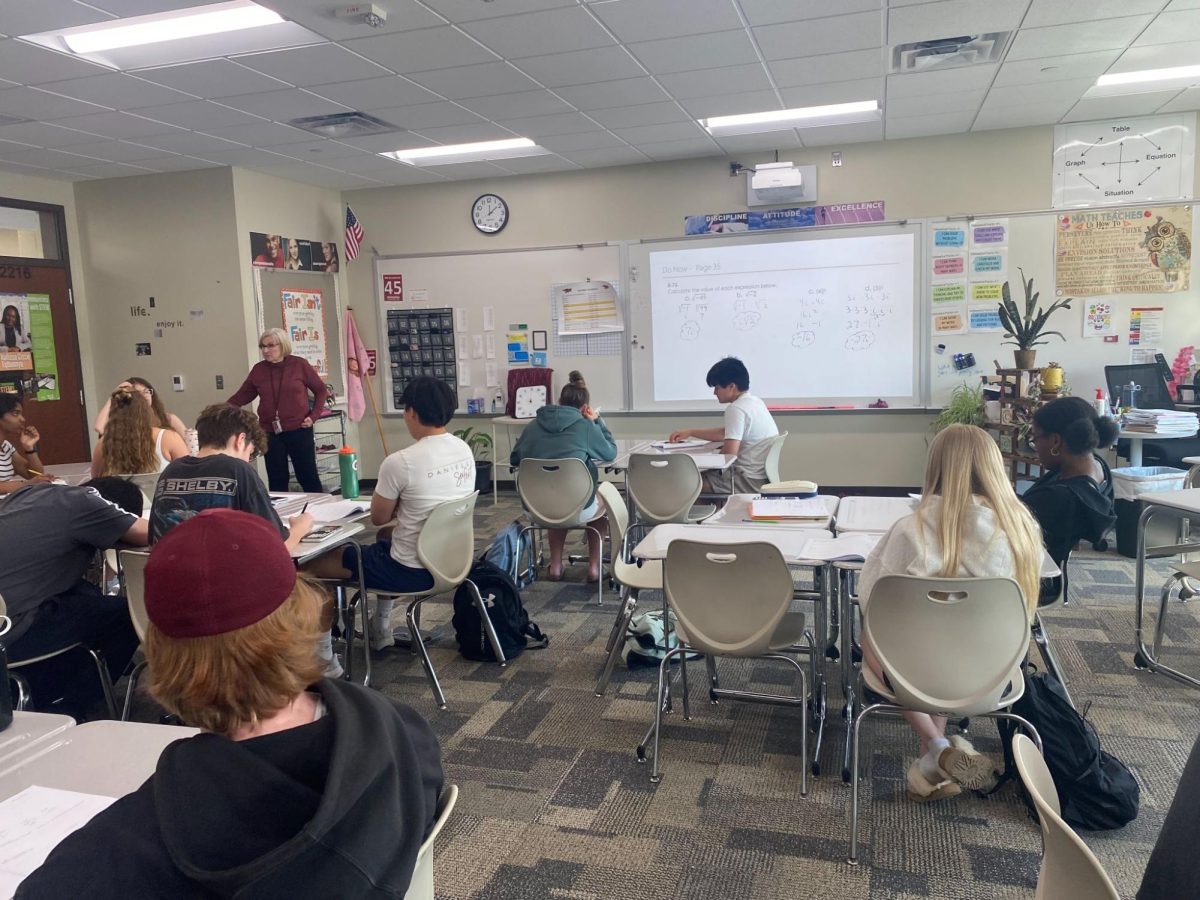

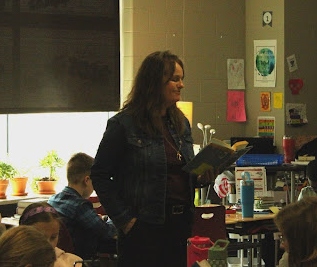









Grief is something every human will eventually go through. Whether it is the passing of a loved one, losing a job, or a bad breakup, we all have to deal with it. Much of grief can come with feelings of hopelessness and depression, and it’s one of the hardest challenges a human can go through. AHS business education teacher Lisa Benjamin, math teacher Lacy Wadle, and social studies teacher Kelley Emke know the difficult reality.
Benjamin had been married to her husband Russel for 29 years. They had two children, good jobs, and plenty of future plans. At 53 years old, due to sudden health complications, Russel passed away.
“My husband died very suddenly one night. He was actually out of state, but I had literally just talked to him, so we had no warning this was going to happen,” Benjamin said. “He had gone down to our lake house. It was flooding, and he needed to get the boats out. I knew he was supposed to be back on the road pretty soon so I called him. He didn’t answer, and I kind of knew something was wrong.”
With intense weather hailing from a midwest storm, Benjamin took action and attempted to get a hold of him any way possible as worries began to flood her mind.
“I kept trying to call him. I contacted friends and family down there at the lake, and they went over, and they’re like, ‘We’re concerned. You know his car’s there, the door’s wide open, his wallet and phone are in the car, and he’s nowhere to be seen,'” Benjamin said. “We were thinking he’s probably just out helping somebody because that’s how he was. And he actually was.”
While taking care of his own boats and making sure they did not get destroyed in the storm, he saw his neighbor’s boat out and called to ask if he could take care of it for them. His neighbors appreciated his generosity and gladly accepted the offer. While in his neighbor’s lake house trying to help, Russel experienced what could have been an intense heart attack or aneurysm and died instantly. His own family did not even know what happened or where he was for hours.
“It was pretty tough because I was back here in Iowa and he was in Missouri. You know I’m trying to get kids together, and we decided to drive down there as a family to help look,” Benjamin said. “They were bringing in a dive team to look for him because they thought maybe he had slipped on the dock.”
Not long after the search had begun, Russel was found in his neighbor’s lake house and pronounced dead. The effects on Benjamin and her family were immense.
“To be told that the father of your children, the person you’ve been married to for 30 years, is just gone,” Benjamin said. “It’s just, it’s really, it’s a shock.”
Wadle can relate to this experience and these feelings. Two years ago her husband died suddenly during surgery.
“My husband was sick for probably about a year. He needed an organ transplant,” Wadle said. “They were so hopeful that it would work, so I didn’t think anything would happen. But he died in transplant and it came as such a shock because nobody expected it.”
Benjamin and Wadle both suffered intense grief after their losses and felt the impact of the loss throughout every piece of their lives.
“All the dreams that we had planned on doing, and the things that we planned on doing. We were going to build a house down there. We were going to do all these things,” Benjamin said. “And when we retired we were going to live at the lake, and like all of that in a way made it feel as if a part of me died. If that makes sense. My goals were gone. My life was totally changed.”
Benjamin especially noticed the challenges the most within the first year or two after her loss.
“The first year is really the hardest. The first Christmas, the first anniversary, it’s just hard,” Benjamin said. “It’s kind of hard to find your joy again. Because you feel a little guilty to be joyful.”
Wadle really felt the loss of her husband throughout her day-to-day life. She had lost her main form of support and her best friend.
“Just having another person to support the house and do the yard work and pay the bills and all that, like, that’s gone,” Wadle said. “It was crazy when I had to start mowing my yard, shoveling my driveway, and all of the stuff he used to do.”
Emke also had difficulty adjusting back to normal life after the loss of her mother who got an infection that spread to her heart valve. It was not curable.
“I talked to her twice a day, she was my son’s best friend, and it tore him apart. It was hard to watch because she was just the perfect grandma. She bakes cookies, plays games, and does all of the perfect grandma stuff. It really shook up my world, and especially with it being right before school started, I didn’t process it that well,” Emke said. “When my mom passed away, it felt like the world ended, it kind of did for a year. I didn’t make progress. I remember not really knowing my students’ names because I couldn’t even function, it was like I was so stuck in the past.”
Finding a way to get back to normal is one of the hardest parts of the process. Reportedly, experts suggest maintaining a sense of routine and normalcy by continuing to do everyday things. Such as eating enough food, drinking water, and getting enough sleep. Other more direct methods include joining support groups, talking with a therapist, or focusing on hobbies and activities as you adjust to a new life. Some other resources available are hotlines, such as Substance Abuse and Mental Health Services Administration (SAMHSA) National Helpline.
“I joined a group of widows and widowers in Ankeny and that group has become my safe place,” Benjamin said. “When I’m having a bad day, maybe something made me think about him. They are supportive and they really understand. Other people don’t understand.”
While Benjamin found great support from others who could relate to her and who she could feel vulnerable with, Emke found a large deal of support from her students at AHS.
“Teenagers get such a bad rap and sometimes they deserve some of the things people say, but most of the time they’re the kindest humans. They’re in such a transitional period and they’re so compassionate and understanding,” Emke said. “I knew maybe I wasn’t going to be the best teacher for a while, and that’s okay. We’re all going to be good, and we’re all going to deal with it. So I was really amazed at how great they were.”
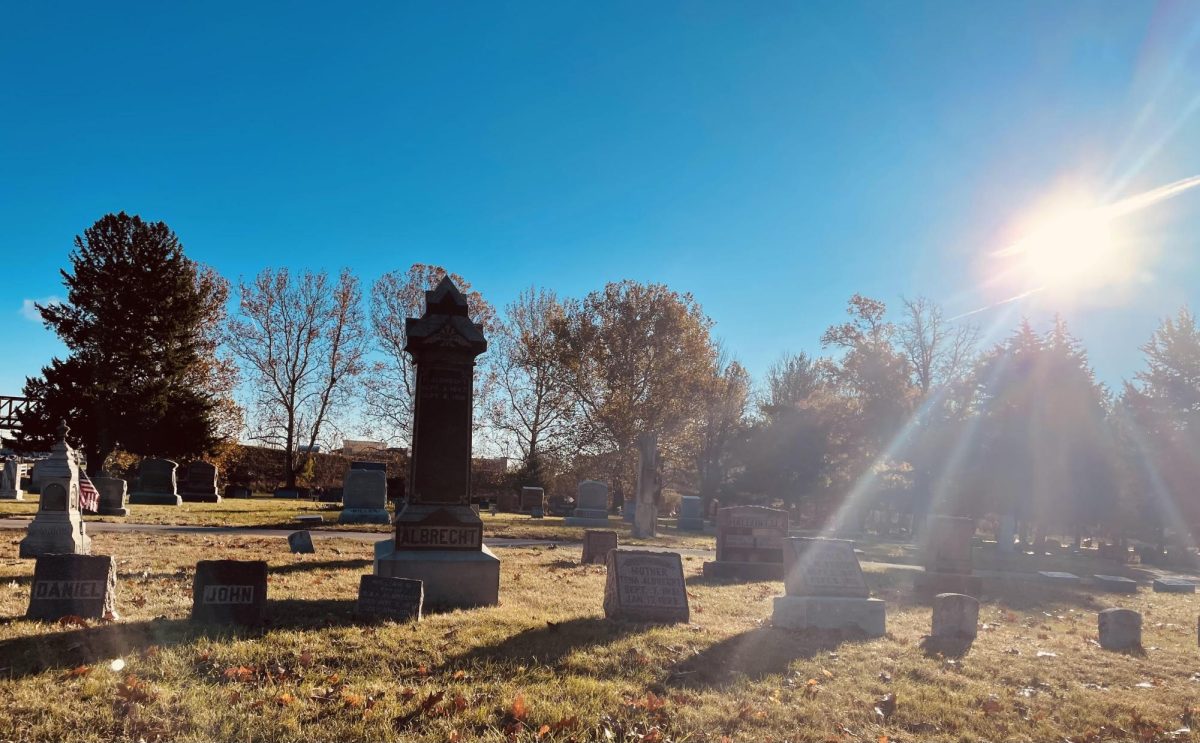
After years of adjusting to a new life and dealing with their grief through many outlets, all three of them eventually reached a point where it was not the end of the world anymore. Inescapable thoughts of hopelessness and depression subsided and they could start living again. But just because the big feelings go away, it does not mean it all disappears.
“It’s been over five years and I still have days where I miss him tremendously. I still cry five years later. The mourning doesn’t end,” Benjamin said. “Grief doesn’t end. It just changes. Like how after he first passed I couldn’t look at a picture of him without crying, but now when I look at the pictures I think of the positive memories.”
Learning how to adapt to and learn from that grief is a major takeaway that all of these women have discovered from their experiences.
“I didn’t see it right away and it definitely took some time, but by the time I came back to school in August, I was starting to feel like maybe everything had worked out just the way it should,” Wadle said. “It just took a little time for me to get through the sadness and the disbelief and be like, ‘you know what, I’m going to be okay.’”
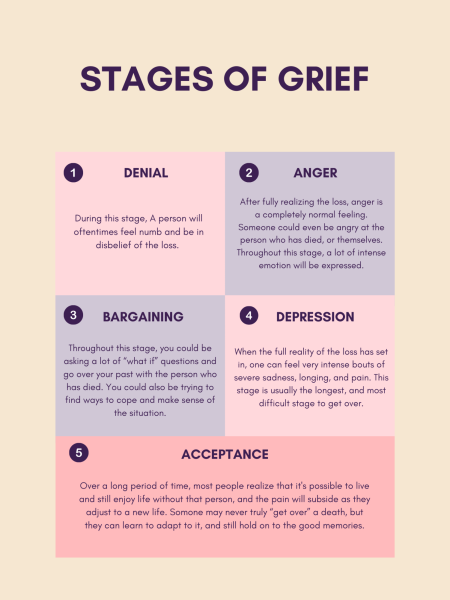
Grief isn’t a one-way road. It does not go step by step all the way until the end then disappears. It is a unique experience for every single person. That is why it’s important to stay open-minded and to talk about it. Benjamin, Wadle, and Emke have all made it to a better place because they found their own forms of support by reaching out for help.
“Everybody’s growing process is different and we have to respect that. Take the time you need, and don’t be afraid to reach out because there are plenty of avenues to utilize, and you have to be willing to do that,” Wadle said. “In the moment, maybe you think it’s not going to be okay, but it will. It’s going to be okay.”