




![Sophomore Lily Bell posing as a player in the senior assassin game. Seniors participating in the game eliminate others by squirting them with a water gun, and can wear goggles for immunity against others. “People did have to go out and buy [water] guns, but most people have the googles at home, but you don’t even have to use a gun, you can use water of any sort,” senior Gwyn Christensen said.](https://ahstalonnews.com/wp-content/uploads/2026/05/unnamed-1-1-900x1200.jpg)

![The shadows against a captivating blue are a nod to the “Catch Me If You Can” musical poster, both for this performance and the blue from the Broadway show. The detectives in this scene are at shooting practice, in preparation for when they finally encounter Frank Abagnale Jr. “We always say our motto is ‘theater is a team sport,’ and really just emphasizing to our students that everyone is welcome in the drama department. There's always a role for you, whether or not, on stage or behind the scenes, in the costume shop, in the scene shop. [There are] all sorts of different things that go into bringing a show to life. So we love our drama hawks and welcome everyone to drama,” Drama Director Mollie Jo Blahunka said.](https://ahstalonnews.com/wp-content/uploads/2026/04/cmiyc-1200x800.jpg)

![Henry, Emily (2021). People we meet on vacation [Book cover]. Berkley Books. Image used under fair use for purposes of commentary and review. Haley, Brett (2026). People we meet on vacation [Movie poster]. Movie poster courtesy of 3000 Pictures and Temple Hill Entertainment. Made by Adilyn Hoop using Canva.](https://ahstalonnews.com/wp-content/uploads/2026/01/vacay1.png)









![Lockhart, E. (2025). We fell apart [Book cover]. Delacorte Press. Image used under fair use for purposes of commentary and review. The newest book in the “We were liars” collection was released Nov. 4.](https://ahstalonnews.com/wp-content/uploads/2025/11/wefell1.png)










![A Group of PEOPEL PE students and helpers set up an obstacle course during class. The “Amazing Race” unit had started in PEOPEL PE where the students and helpers got to compete in a variety of different activities and games. “We try our best to make [inclusion] a school-wide event, but it's just so much more different when you actually engage with the students hands-on and actually get to know them as people.” Sophomore Bree Christensen said. Photo Taken by Ada McNulty.](https://ahstalonnews.com/wp-content/uploads/2026/05/unnamed-12-1200x900.jpg)













You catch sight of a dog walking past you, the pup’s leash in the hand of a girl a grade below you. You want to go up to her or pet the dog as it passes by, but just like you, the dog has a job while at school. Large letters on the canine’s vest read “Service dog,” and the focused look in the dog’s eye shows you that they are occupied and busy, working to keep their owner safe.
In 1990, the Americans with Disabilities Act (ADA) was passed, recognizing service animals in public places, including schools. This act requires that schools accommodate service animals for students, and this includes our service dogs here at Ankeny High School (AHS).
Training of service dogs
Training a service dog can take anywhere from three to five years, depending on the dog’s temperament, health, and motivation. The training method you choose to go through, as well as the breed of your dog, can also influence your training experience.
Prelude Assistance Dogs is a non-profit organization located in Central Iowa. Emily Stokes is the head trainer and president. They work to train service dogs, therapy dogs, and emotional support animals.
“We do fully trained program dogs, from puppy to adult. We train dogs for specific disabilities, but they learn basic service training before,” Stokes said.
While the ADA does not specifically outline when a service dog is considered “fully trained”, many states, including Iowa, provide legal protection for animals in training to be in the same public spaces as trained service dogs.
“The law does not have specific regulations,” Stokes says. “It’s left intentionally vague, which I think makes it more accessible.”
Charlotte Wardell is a sophomore at AHS, and every day she is accompanied by Edgar, a three-year-old black lab. Charlotte and Edgar have been partners since Edgar was a puppy, and he has been trained to work with her.
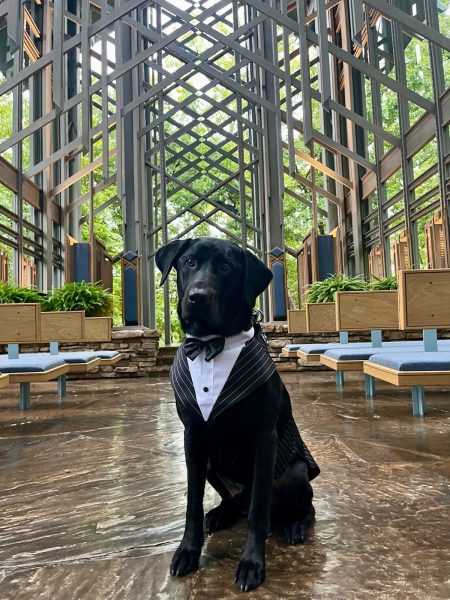
“We got him from a breeder; he and his litter were bred to be service dogs. When we got him, he had good manners and behavior. The breeder taught him things that we built off of,” Wardell explained.
Service dogs work specifically for one person’s disability, and if someone else takes them out, they are no longer protected under legal means.
“We had a client come in who is deaf but uses a hearing aid. His dog was trained to be alert to important sounds like a phone ringing or the fire alarm,” Stokes said.
While this process can vary from center to center, all dogs work with their trainer toward the same goal.
“He’s been working ever since we got him. He’s been really ahead of everyone else in his class, I think he’s incredibly determined to help me,” Wardell says.
Service dog compared to an emotional support animal
Under the Americans with Disabilities Act, service animals are defined as dogs trained to
perform tasks for a person with a disability. Access is based on the animal’s behavior and training. Things like age, breed, or size do not factor into whether a dog is considered a service animal.
An emotional support animal (ESA) is any animal that provides comfort or companionship to a person with a mental or emotional disability. These can range from anxiety to depression.
“Emotional support animals comfort their person, but are not trained for specific tasks,” Stokes said.
Unlike trained service animals, ESAs are not trained or required to do certain tasks. The ADA does not provide legal protection to ESAs in public, but the Fair Housing Act (FHA), provides emotional support animals some housing rights, allowing them to live with their owner in pet-prohibited housing. To obtain an ESA, you need a letter from a licensed mental health professional.
“ESA dogs and service dogs are completely different,” Wardell explains. “Service dogs do a task, [but if people] don’t see something visibly wrong with you, they assume it’s an ESA dog. A lot of kids and adults jump to assume it’s an ESA dog, which is not the case.”
Misinformation about the difference between ESA dogs and service dogs is still prevalent today, especially with the presence of social media.
Kathryn Dennis, a sophomore at AHS, is also a handler of a service dog. She and Milo have been working together for around two years. Milo is a three-year-old German Shepherd-Lab mix.
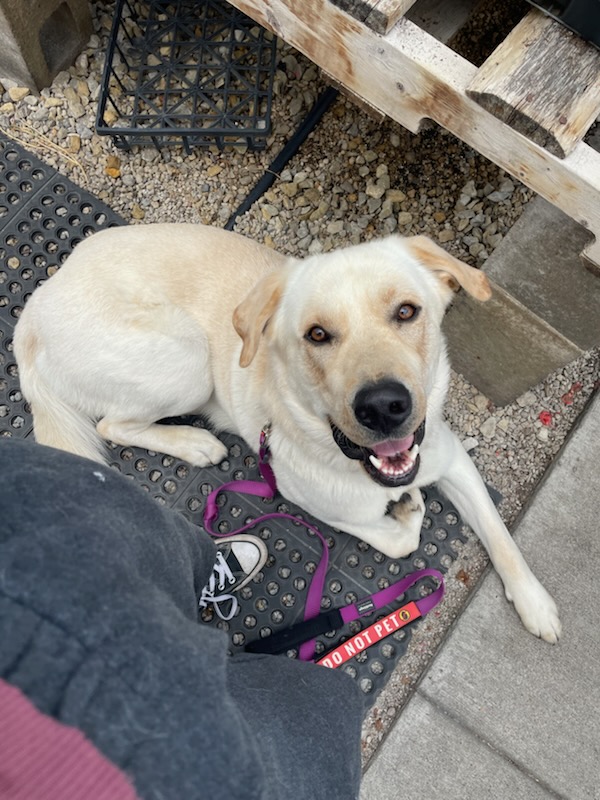
“A lot of times people don’t really know the difference, so sometimes they ask.” Dennis said. She reports educating people on the difference between an ESA and service dog in public.
Impact of having a service dog at school
While service dogs can affect almost every aspect of everyday life, for our students at AHS, having a service animal with them has changed school in many ways.“I feel like it affects it positively and negatively,” Dennis explains. “Sometimes people think of me differently but then also he just makes me feel so much more comfortable.”
While the service dogs are working, they attend class with the girls and go everywhere they go.
“In sixth and seventh grade, I missed a lot of school because I could not be there physically. My mental and physical health were affected badly,” Wardell said. “The first year I had Edgar, I only missed four days of school. My academics and mood about school improved so much. I would not be as good if it weren’t for him.”
Recently, service dogs have become more common as the awareness of disabilities increases. While the number is growing, many Americans remain unserved. According to various sources, there are only around 500,000 working service dogs.